
Popular Designs of Luxury Villas in Ubud
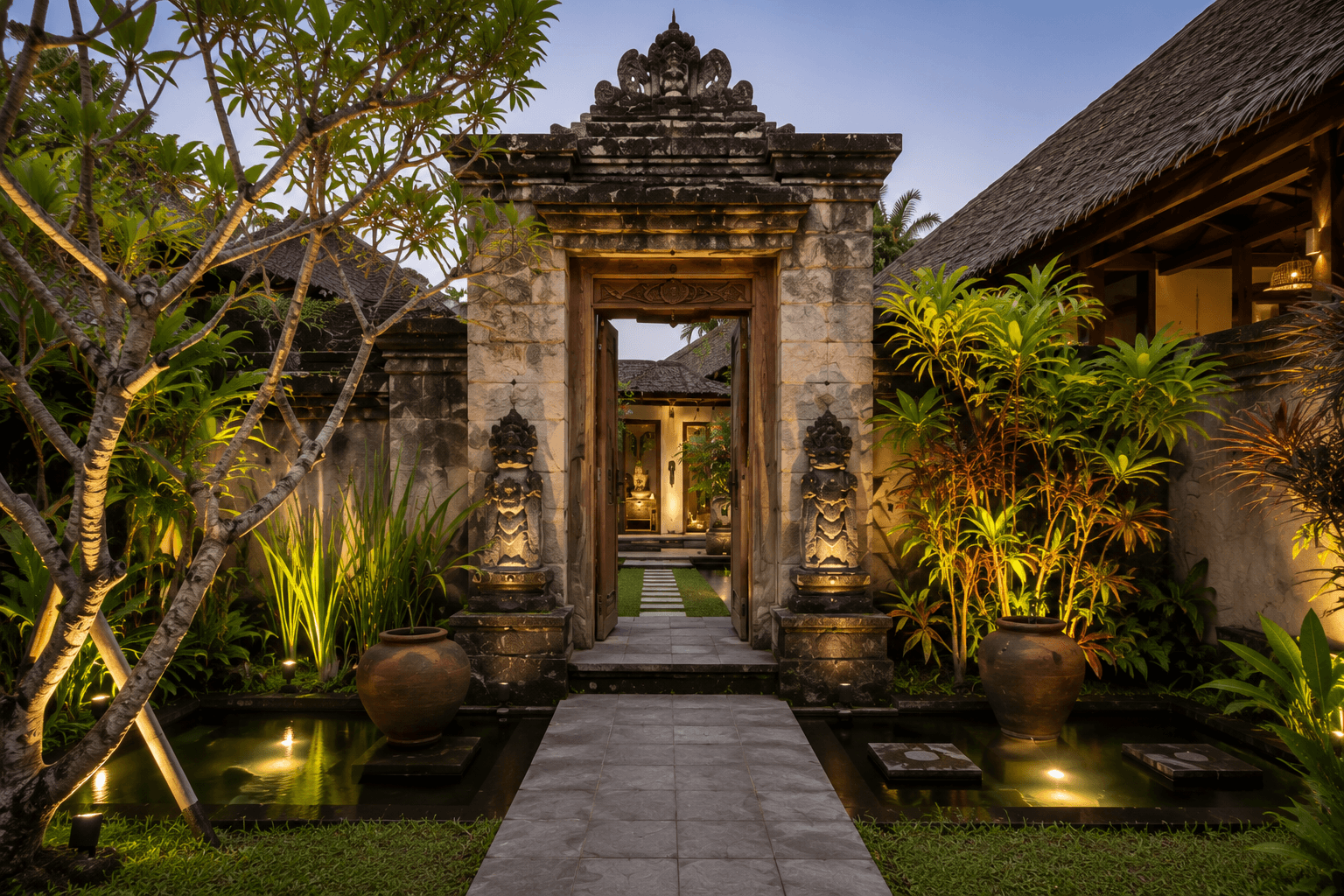
Ubud, located in the central highlands of Bali, is known for its lush rice terraces, tropical forests, and cultural richness. Unlike coastal locations, Ubud offers a more serene and nature-immersed setting. Luxury villas in this area reflect these qualities, combining refined design with a deep connection to the landscape and local heritage.
One of the most common design approaches in Ubud villas is integration with nature. Many luxury villas are nestled among rice fields, tropical gardens, and mature trees. Architects emphasize views, natural light, and seamless transitions between indoor and outdoor spaces. Floor-to-ceiling glass walls, open living areas, and private garden courtyards help residents feel connected to the landscape at every moment.
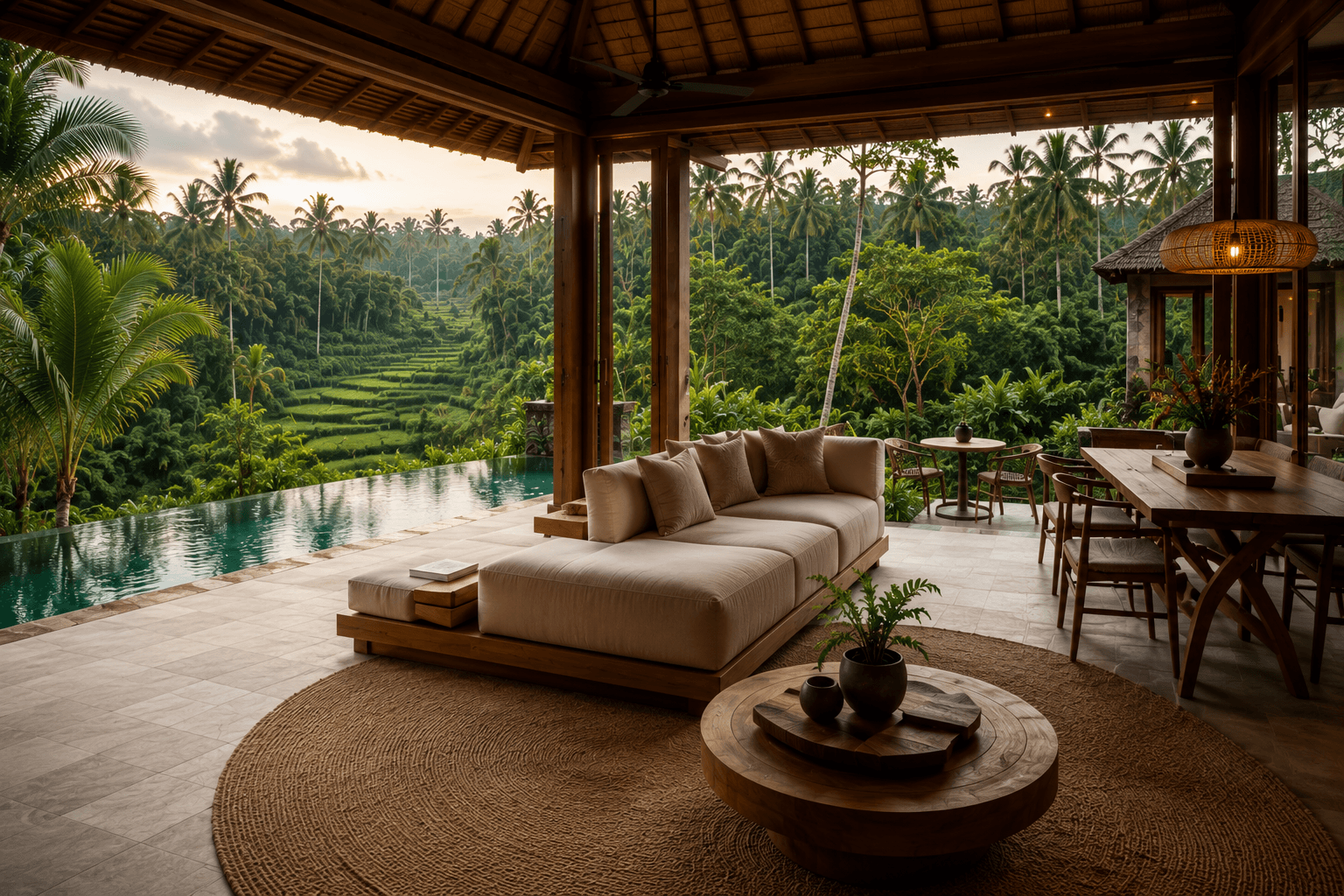
Another characteristic feature is use of natural and local materials. Teak wood, stone, bamboo, and woven fibers are often chosen for both structure and finish. These materials not only create a warm and elegant aesthetic, but also respond well to the tropical climate. Natural materials carry visual and tactile qualities that enhance comfort and authenticity.
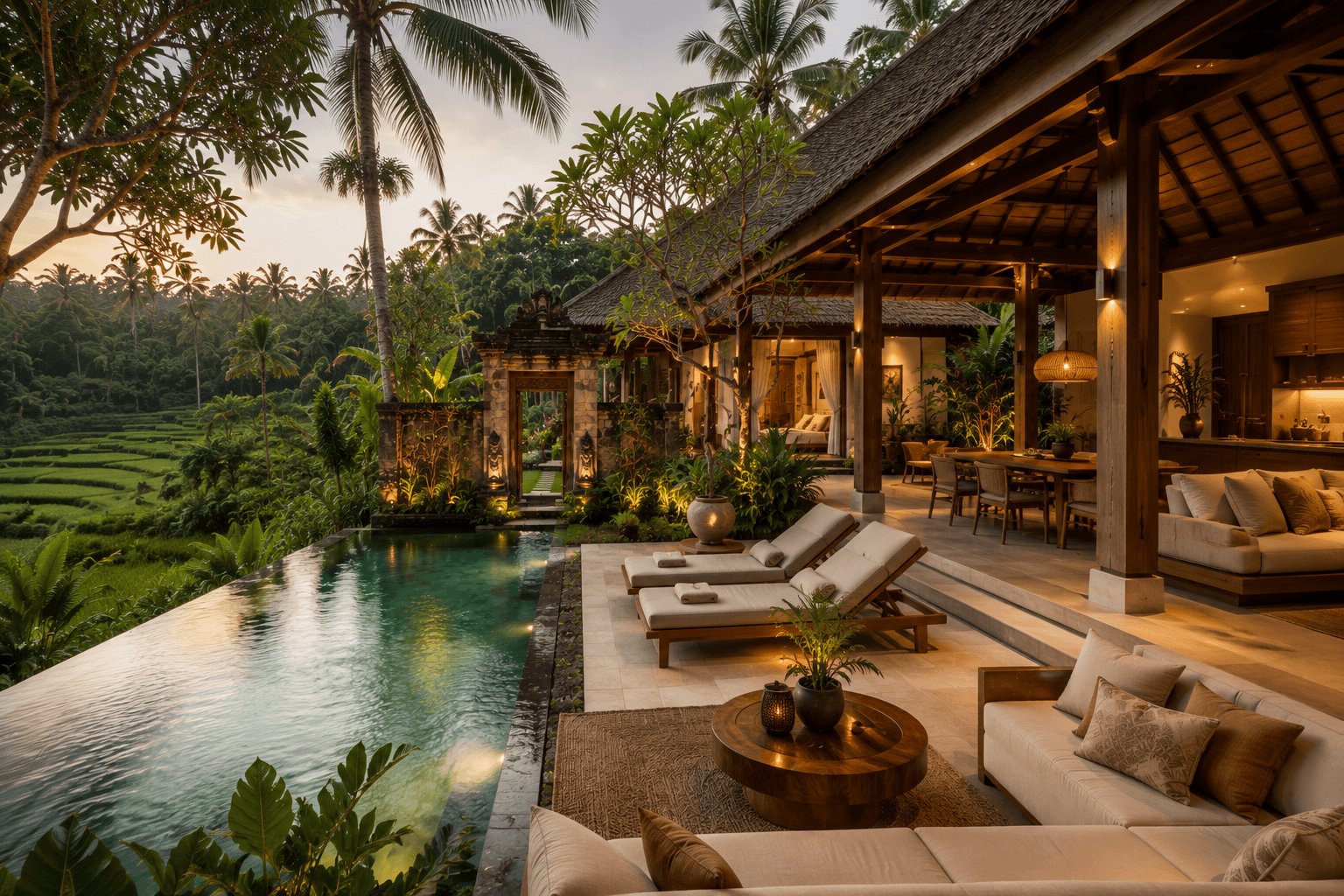
Luxury villa design in Ubud often highlights privacy and tranquility. Villas are typically arranged to create private zones with minimal direct sightlines between buildings. Private pools, secluded lounge areas, and intimate garden spaces are common, allowing residents or guests to relax without distraction. Landscaping plays an important role in defining these private areas while reinforcing the tropical atmosphere.
Cultural sensitivity is also fundamental to villa design in Ubud. Traditional Balinese elements such as carved wood details, temple-inspired gateways, and locally inspired ornamentation can be found in many luxury properties. These details provide cultural depth and a sense of place without overpowering the overall modern design.
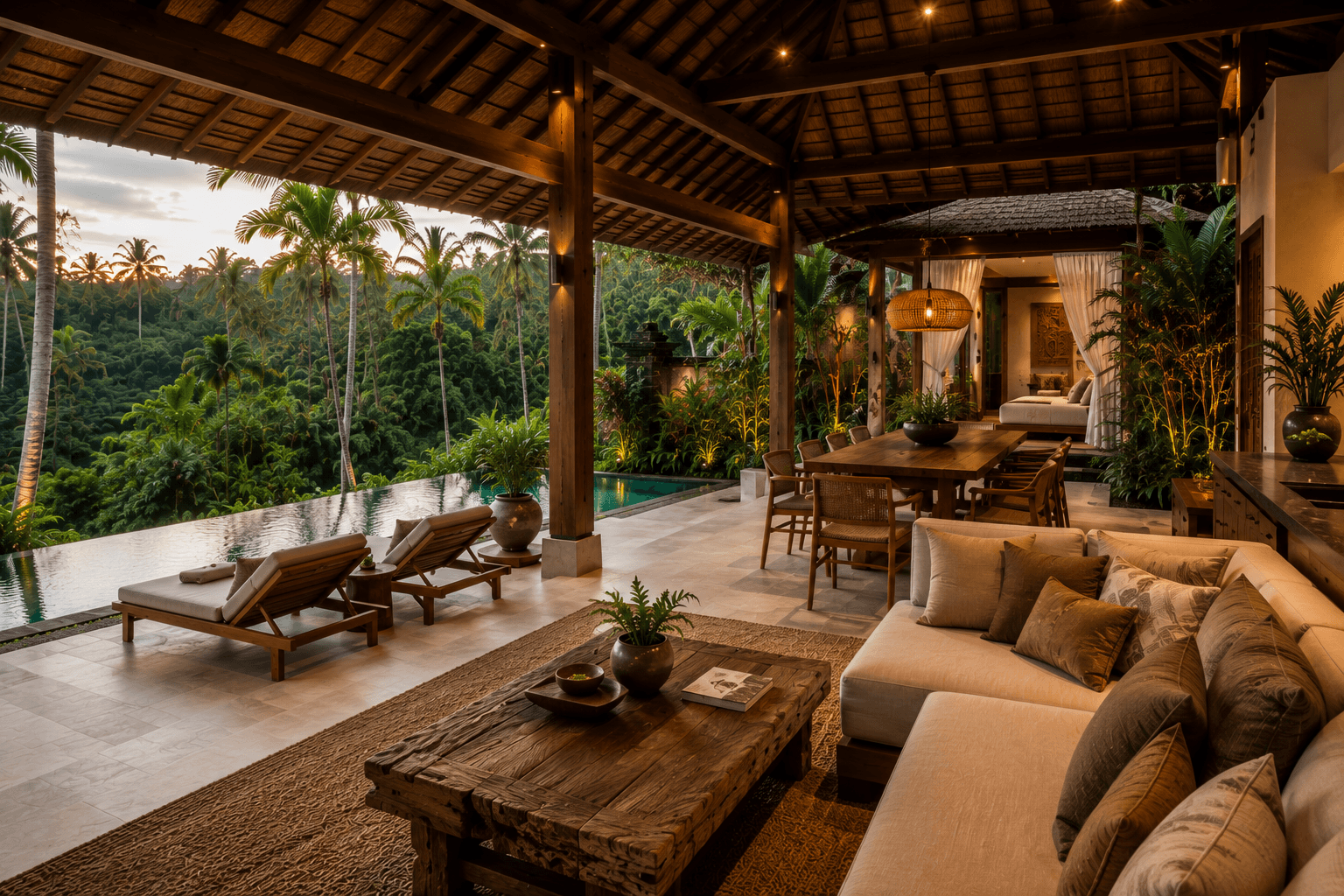
Open-plan living spaces are another trend in luxury villa design. Living rooms, dining areas, and kitchens are arranged to feel expansive yet harmonious. The open plan not only enhances airflow and natural light, but also encourages family interaction and flexible use of space. Outdoor living areas such as covered terraces and sun decks extend the functional space and make full use of Ubud’s mild climate.
Water features are commonly integrated into luxury villa design. Private pools, reflecting ponds, and cascading water walls are used to create visual focal points, enhance ambiance, and support cooling air movement. In addition to aesthetics, water elements contribute to a sense of relaxation and luxury.
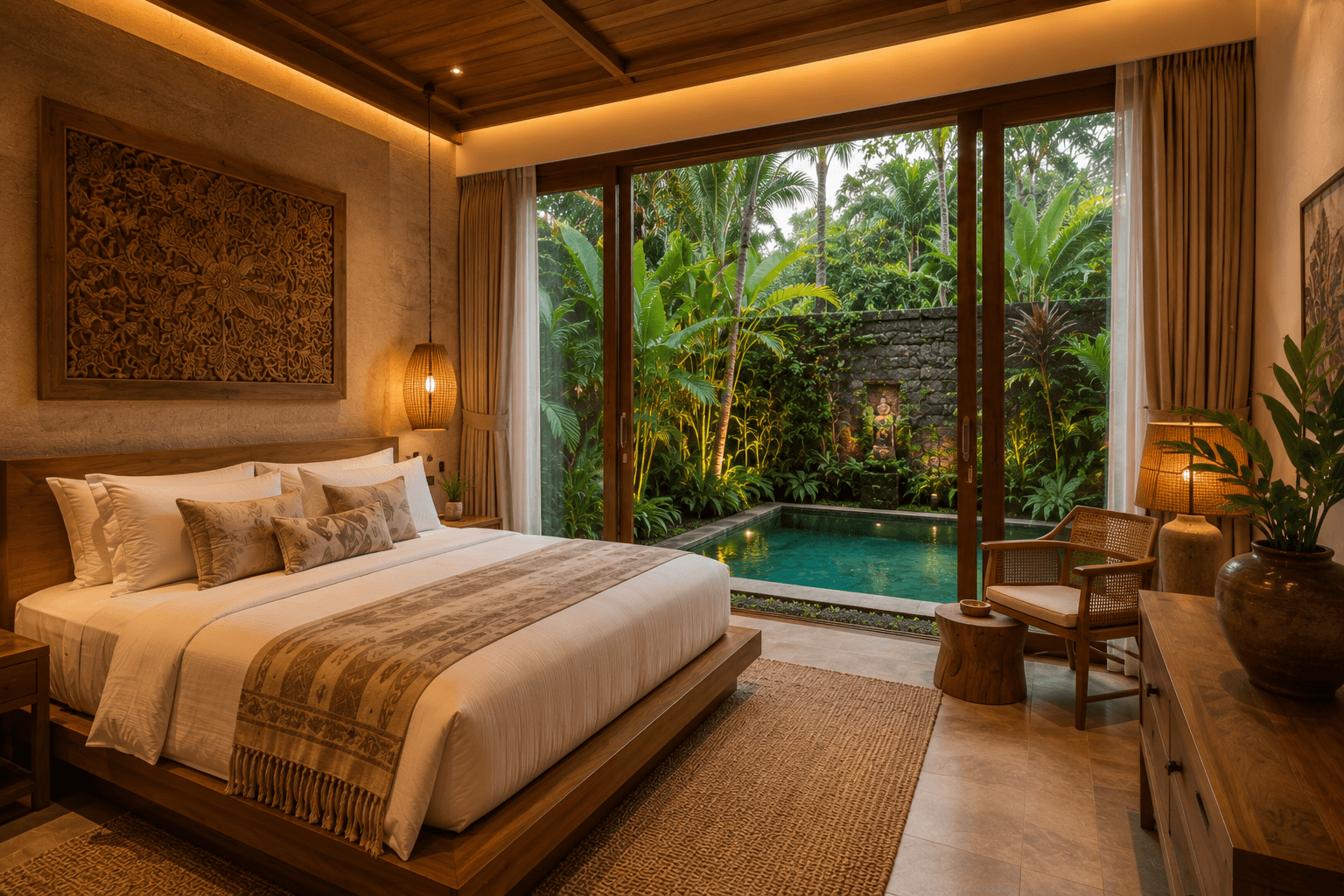
Interior design in Ubud luxury villas often blends contemporary style with handcrafted elements. Simple, elegant lines and neutral color palettes allow natural materials and landscape views to take precedence. Carefully selected furniture enhances comfort and supports timeless design. Attention to proportion, balance, and detail helps create interiors that feel both refined and welcoming.
In summary, luxury villa design in Ubud reflects a balance between nature, culture, comfort, and aesthetic refinement. Integration with the landscape, use of natural materials, privacy, cultural elements, open living spaces, and thoughtful interior design are key characteristics. These design choices create villas that feel peaceful, elegant, and deeply connected to Ubud’s unique environment.